Author: Boris Karebin

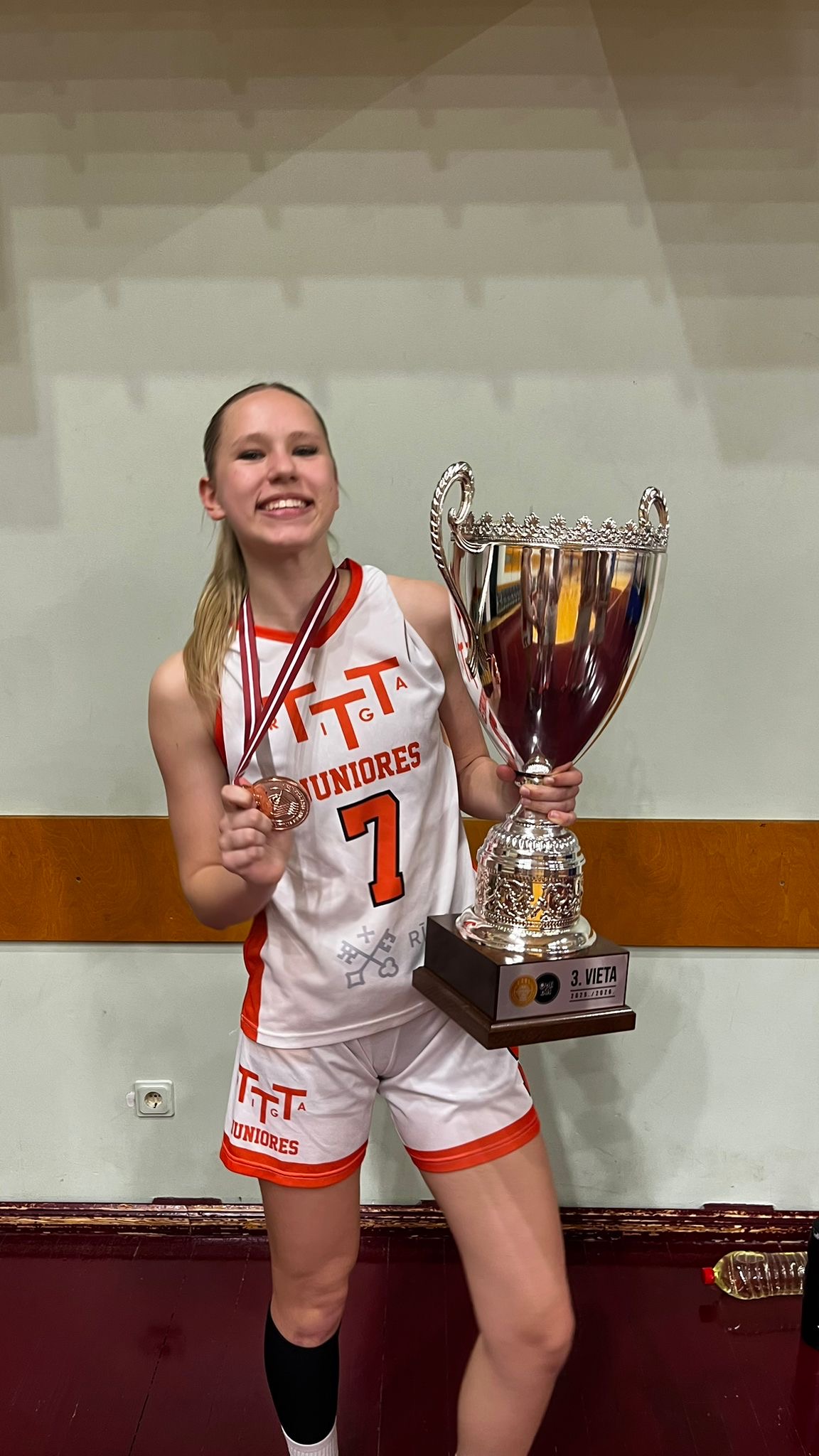
  • Kristīne Hauka deserves her NCAA opportunity

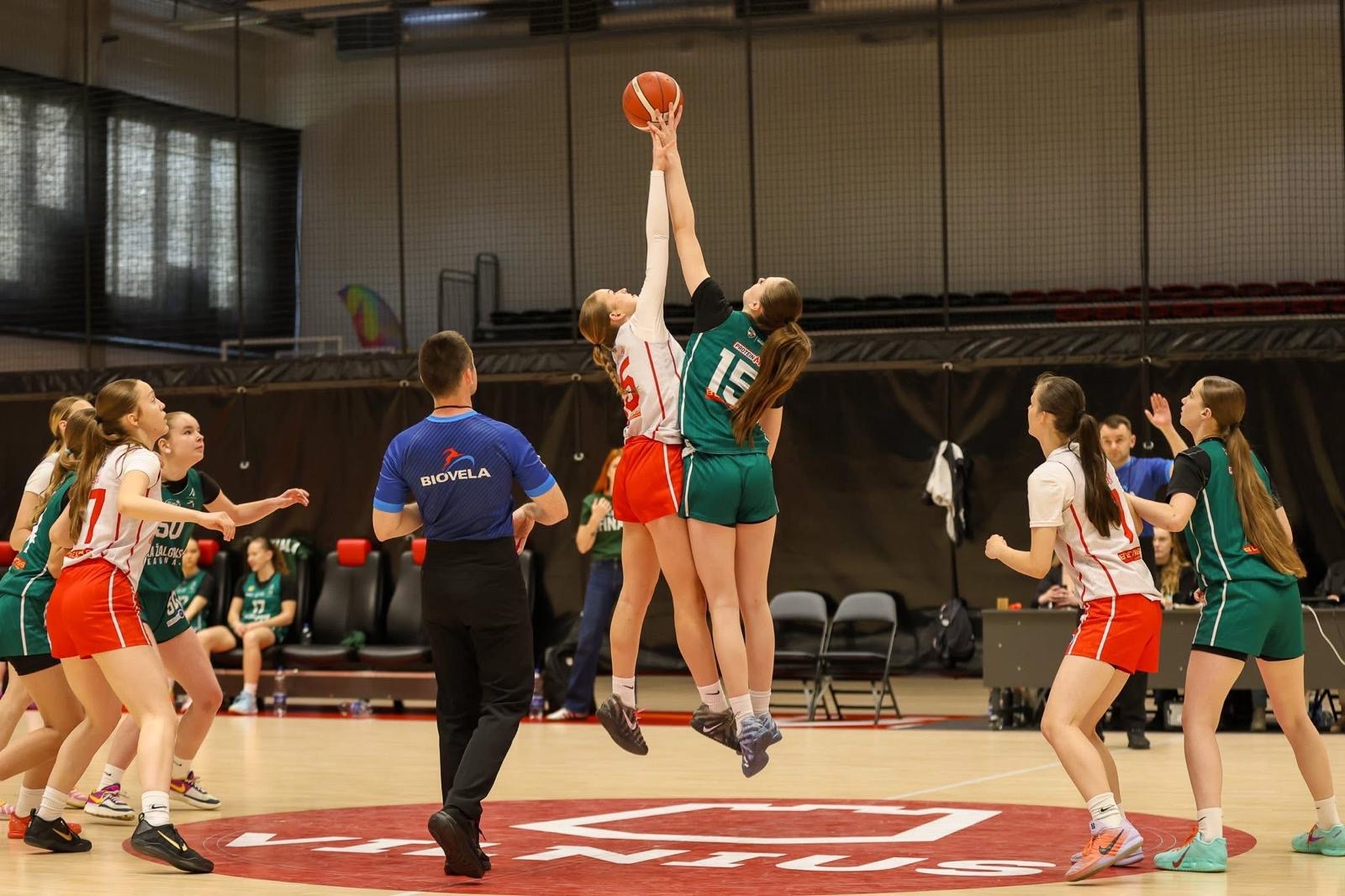
    Kristīne Hauka deserves her NCAA opportunity

    Latvian basketball has long been recognized for producing intelligent, fundamentally sound players capable of succeeding at the highest levels of European and international basketball. We believe that Kristīne Hauka is another player who deserves serious attention from American colleges.

    Despite representing one of Latvia’s strongest youth basketball programs, Kristīne has not yet received the recruiting attention we believe she has earned. At BK-CENTRE, after reviewing her performances and evaluating her long-term potential, our scouting staff believes this is an oversight that should be corrected.

    Kristīne is a product of the outstanding Mārupes basketball program led by head coach Mārcis Pliens, who has done an excellent job developing a talented core of young players. Several of her teammates—including Ieva Vēvere, Anete Ozoliņa, and Aleksa Skudra—have already attracted attention from colleges and are also members of Latvia’s national team program. The success of this group reflects the quality of coaching and player development within the Mārupes system.

    Our evaluation is straightforward. Kristīne possesses the basketball IQ, competitiveness, and long-term potential to become a successful NCAA player. We believe she is NCAA Division One player and for her development she might spend one season at a top junior college (JUCO), where she can continue building strength and physical maturity while adapting to the American game. After that, she has the ability to compete at the NCAA Division I level for four years.

    Like many talented European players, Kristīne’s greatest area for improvement is physical development. That will come with time, proper strength training, and daily competition. The basketball foundation is already there.

    We also believe that an NCAA career would significantly strengthen her chances of becoming a permanent member of Latvia’s national team. Competing every day in one of the world’s most demanding college basketball environments would accelerate her growth and provide valuable experience that she can bring back to the Latvian national program.

    At BK-CENTRE, we strongly believe that Europe’s best young players should have opportunities to compete in American college basketball, where they can continue their education, develop as athletes, and gain experience against elite competition while proudly representing their home countries in international basketball.

    Kristīne Hauka deserves that opportunity. We hope American college coaches will take a closer look at one of Latvia’s promising young talents.

  • Tatyana Evko Holds Her First Practice with New Mexico College

    Tatyana Evko Holds Her First Practice with New Mexico College

    According to BK-CENTRE President Boris Karebin, who was the visionary and architect behind this project, Tatyana’s move to the United States became possible thanks to the joint efforts of many people. He expressed his gratitude to Nathan Avenhofen, CEO of ABBA Group Gio, and Yevgeny Babaytsev, Tatyana’s first coach, whose cooperation and commitment helped make this opportunity a reality.

    Eighteen-year-old Tatyana Evko from Temirtau, who recently graduated from high school in Magnitogorsk, has taken the first step in her American basketball journey. After playing for junior basketball clubs in Magnitogorsk and Orenburg, she completed her first practice with the women’s basketball team at New Mexico Junior College.

    According to Head Coach Austin Mefford, the first practice went very well. He explained that the team’s primary focus during the first week is helping newcomers adjust to their new environment. With players arriving from different countries, they need time to adapt to the climate, living conditions, food, academic life, and the intensity of college basketball practices. Once the acclimatization period is over, the team will gradually increase the training load.

    Tatyana was also pleased with her first day on the court.

    “The practice was very intense, and the workload is definitely demanding. But this is exactly what I expected. I’m very happy to be here, I already love everything about this place, and it’s a completely different level of basketball,” Tatyana said after practice.

    A new chapter has now begun for the young player. The next few weeks will be dedicated to adapting to a new basketball system, building chemistry with her coaches and teammates, and continuing her development.

    We wish Tatyana, the coaching staff, and the entire New Mexico Junior College team a successful season. We hope she quickly settles into the team, builds strong relationships with her coaches and teammates, showcases her talent, and takes another important step toward a successful basketball career.

    Perhaps today marks the beginning of the journey of another rising star in European basketball.

  • FIBA U20 Women’s European Championship: Elina Syniakova Leads Ukraine to Victory, Latvia Defeats Croatia, Lithuania Falls to Israel

    FIBA U20 Women’s European Championship: Elina Syniakova Leads Ukraine to Victory, Latvia Defeats Croatia, Lithuania Falls to Israel

    The third day of the FIBA U20 Women’s European Championship brought another series of exciting games as the race for the playoffs intensified.
    Ukraine earned a convincing 73–53 victory over Switzerland behind another outstanding performance from Elina Syniakova, who finished with 18 points and 7 rebounds, continuing her impressive start to the championship.
    Latvia defeated Croatia 78–64 to remain in the fight for a high finish. Zana Straudovska, who signed with Chipola College this spring, one of the most outstanding junior college basketball programs in the United States, made an excellent impact off the bench, scoring 9 points in just 15 minutes of playing time. Although she is younger than most of her teammates, Straudovska continues to show tremendous potential and could become one of Latvia’s key players after completing a strong season at Chipola College.
    The final game of the day saw host nation Lithuania fall to Israel in a dramatic battle, 74–71. Lithuania was led by Gabija Galvanauskaitė, while Israel received a spectacular performance from Gal Raviv, who scored 35 points and grabbed 6 rebounds. Facing a team with a player capable of dominating the game at that level is an enormous challenge.
    The group stage is now complete, and attention turns to the Round of 16, where every game becomes a win-or-go-home battle and the competition is expected to become even more intense.

  • Elina Syniakova records 13 points and 14 rebounds in the opening game against Czechia at the FIBA U20 Women’s EuroBasket.

    Elina Syniakova records 13 points and 14 rebounds in the opening game against Czechia at the FIBA U20 Women’s EuroBasket.

    Despite Ukraine’s opening-game loss, Elena Siniakova was one of the brightest performers on the court. The talented forward finished with 13 points and 14 rebounds, leading her team against a strong and physically imposing Czech squad.
    The first day of the FIBA U20 Women’s EuroBasket featured several exciting games. As expected, Latvia defeated Sweden, while Lithuania opened the tournament with a victory over Bosnia and Herzegovina.
    Ukraine faced Czechia in its opening group-stage game. The contest remained close early on, but the taller and more athletic Czech team gradually took control. Throughout the game, Siniakova continued to battle on both ends of the floor, keeping Ukraine competitive with her scoring, rebounding and relentless effort.
    With a little more support against Czechia’s size and physicality, the final result could have been much closer. Czechia eventually claimed a 79–64 victory.
    It was only the first game of the tournament, and Ukraine still has every opportunity to improve as the championship continues. Overall, the level of competition at this year’s European Championship is very high, and many of the players participating have the potential to build successful careers in both college basketball and professional basketball.

  • Why Many NCAA Basketball Players Earn More Than Professional Players in Europe

    Why Many NCAA Basketball Players Earn More Than Professional Players in Europe

    The landscape of American college basketball is changing faster than ever before. With the introduction of NIL (Name, Image and Likeness) opportunities and the growth of donor collectives, NCAA athletes can now earn significant amounts of money while representing their universities.

    Let’s look at the current market using women’s NCAA basketball as an example. In men’s basketball, the numbers are often even higher.

    The NCAA Conference System

    There are 32 NCAA Division I conferences. Each conference consists of approximately 10 to 16 universities.

    However, the financial resources are distributed very unevenly.

    The two richest conferences—Southeastern Conference (SEC) and Big Ten Conference—control roughly 60% of the total money available in college athletics.

    The next two major conferences—Atlantic Coast Conference (ACC) and Big 12 Conference—account for approximately 25% of the market.

    The remaining 28 conferences share the final 15% of available resources.

    The stronger the conference, the more television revenue, sponsorships, ticket sales, alumni donations, and football-related income its universities generate. As a result, players at those schools receive significantly greater financial support.

    Estimated Annual Collective Payments for Starters

    Below are approximate annual earnings for starting players through collectives and institutional support programs (excluding NIL endorsement contracts):

    • SEC: approximately $200,000–$800,000 per year
    • Big Ten: approximately $150,000–$600,000 per year
    • ACC: approximately $100,000–$400,000 per year
    • Big 12: approximately $120,000–$450,000 per year
    • Big East Conference: approximately $80,000–$300,000 per year

    By the seventh-ranked conference, many starters typically receive between $50,000 and $200,000 annually.

    Around the middle of Division I (roughly conferences ranked 14–16), typical collective payments fall into the $15,000–$60,000 per year range.

    In the lower conferences, financial support continues to decrease, with many players receiving approximately $10,000–$50,000 annually, and in some conferences even less.

    Every Scholarship Has Value

    Even universities with smaller athletic budgets try to provide financial assistance to their players.

    Most Division I athletes receive a full athletic scholarship, covering tuition, housing, meals, books, and other educational expenses.

    In addition to the scholarship, many players receive money through collectives, alumni-supported organizations that compensate athletes under current NCAA rules.

    NIL Is a Different Story

    NIL (Name, Image and Likeness) earnings are completely separate from collective payments.

    Elite players who build a strong personal brand can sign endorsement agreements worth hundreds of thousands—or even millions—of dollars.

    For example, Olivia Miles reportedly signed NIL agreements valued in the multi-million-dollar range, while several of the nation’s biggest stars have secured NIL packages worth several million dollars annually.

    These are exceptional cases. Most college athletes earn much more modest amounts.

    The Bottom Line

    The financial structure of NCAA basketball has become increasingly professional.

    A player can now receive:

    • A full athletic scholarship;
    • Additional annual income through university collectives;
    • Separate NIL endorsement contracts, if they have significant market value.

    The principle remains simple:

    The better you play, the more opportunities you create—and the more you can earn.