Author: Boris Karebin

  • Daryna “Dasha” Mironenko — Miami Basketball Ballers Lab League All Star Plans to Continue Her Career in the USA

    Daryna “Dasha” Mironenko — Miami Basketball Ballers Lab League All Star Plans to Continue Her Career in the USA

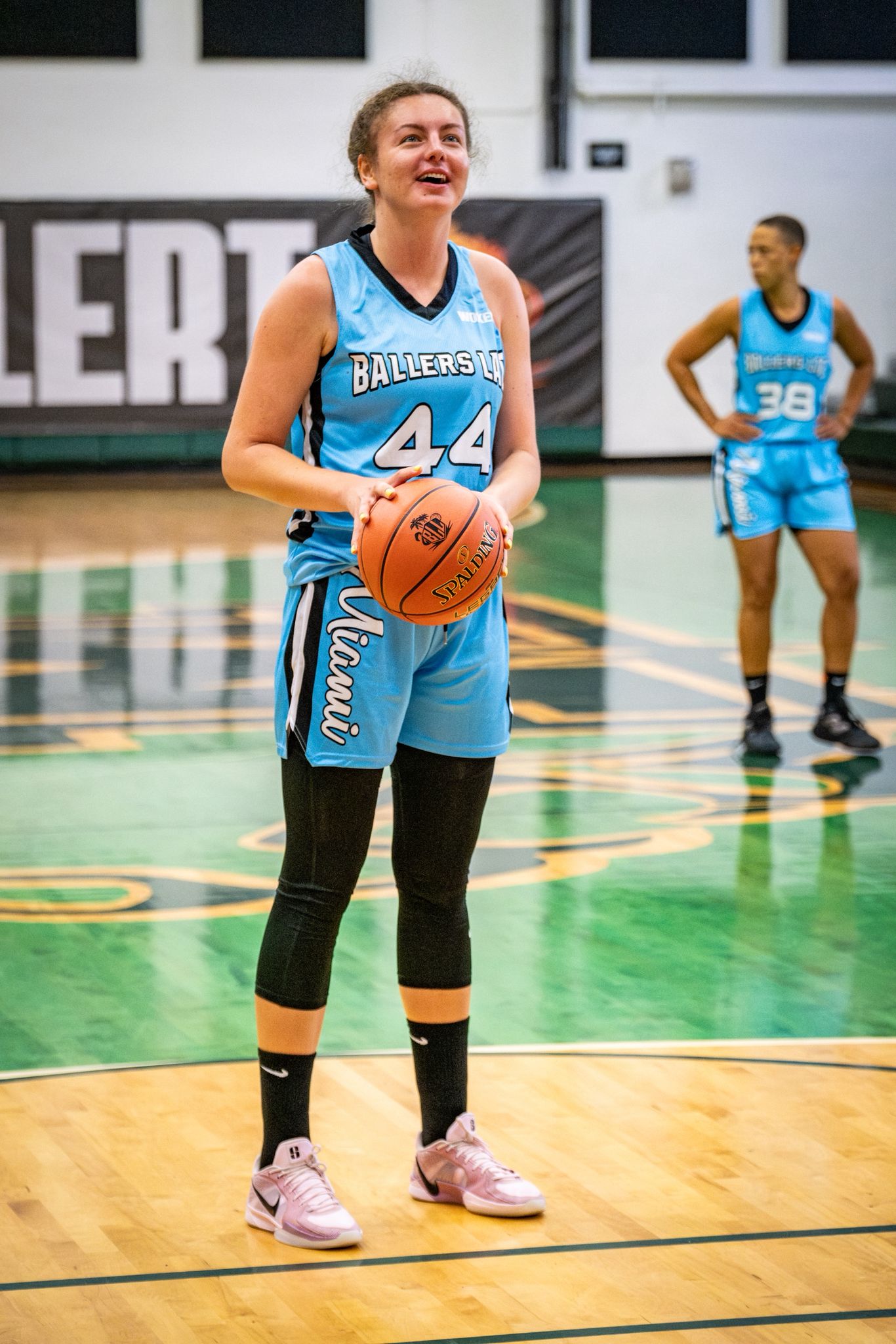
    Currently, Ukrainian national team player Daryna Mironenko is training and competing in Miami with the Miami VIS women’s basketball team in the Ballers Lab League, a competitive Pro-Am league in Miami.

    The league features two divisions and provides organized competition throughout the summer, with games professionally recorded and individual player statistics tracked through SportsVisio. The season includes a regular season followed by playoffs, giving players an opportunity to compete consistently while gaining additional exposure.

    Mironenko is playing her second season with Miami VIS and was also selected to participate in the 2026 Ballers Lab All-Star Game. Miami VIS has officially listed her as a 6’3” Forward-Center (#44). (Miami Vis⁠)

    Her participation in the Miami summer league adds another chapter to an international career that includes appearances for the Ukrainian National Team, a Ukrainian Championship title, a Ukrainian Cup title, a third-place finish in the EWBL, and participation in the FISU World University 3×3 Championship in China.

    Miami VIS player page:
    Daryna “Dasha” Mironenko — Miami VIS⁠

  • WHY IT IS SO IMPORTANT FOR OUR PLAYERS TO TRAIN AT THE BEST COLLEGES AND WITH THE BEST COACHES IN AMERICA

    WHY IT IS SO IMPORTANT FOR OUR PLAYERS TO TRAIN AT THE BEST COLLEGES AND WITH THE BEST COACHES IN AMERICA

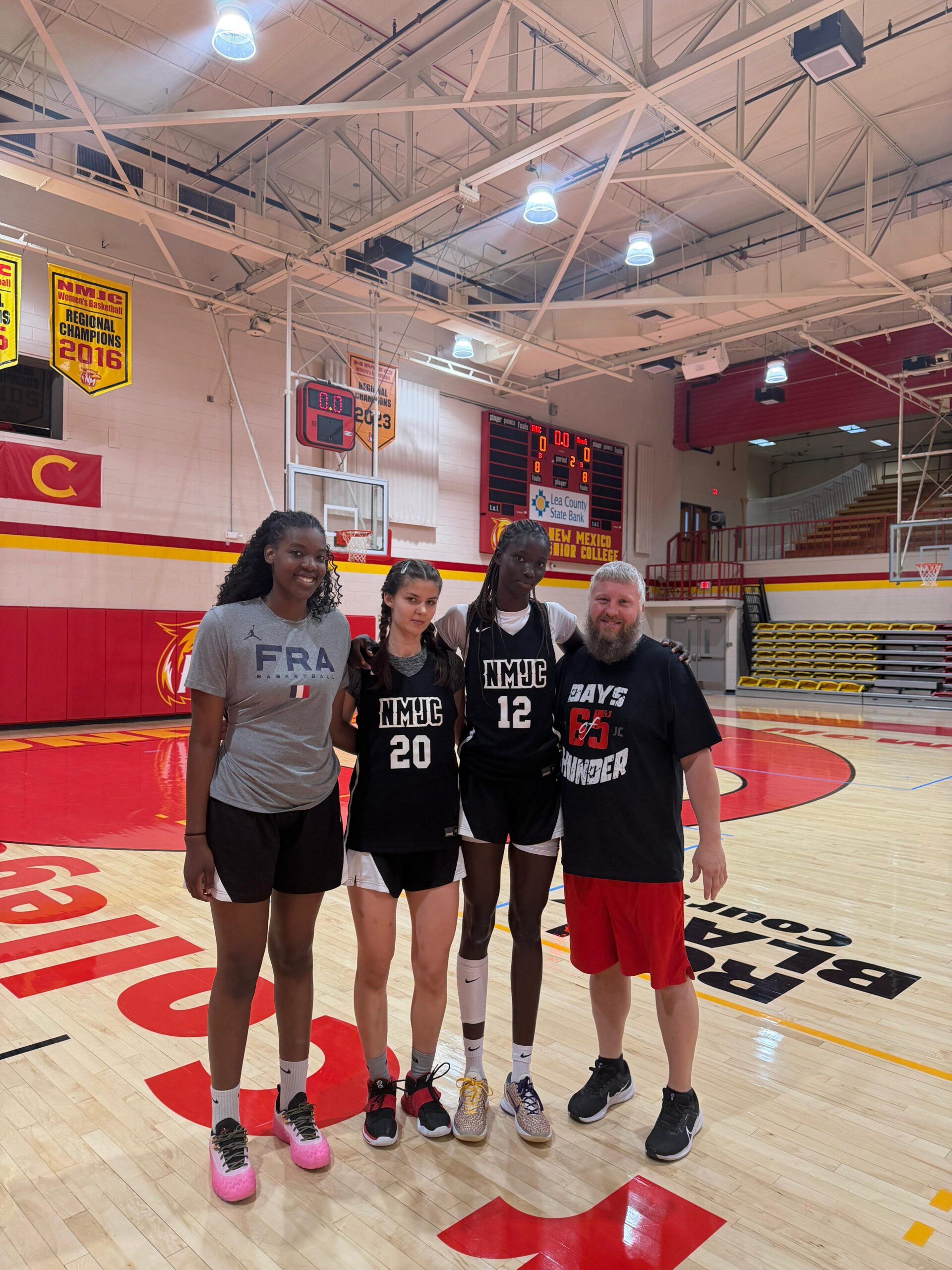
    photo: Coach Austin Mefford, Head Women’s Basketball Coach at New Mexico Junior College,a four-time Conference Coach of the Year
    with some of our international players.


    For us, it is extremely important that our players do not simply attend a university or college, but become part of the strongest basketball programs and work with some of the highest-level coaches in America.

    Why?

    Because the better the coach, the better he understands the player. And the better he understands the player, the faster he can develop the player’s strengths, correct weaknesses, identify the right position, and integrate the player into the team.

    This is especially important in American college basketball.

    College Basketball Is Not Professional Basketball

    College basketball is very different from professional basketball.

    Professional teams are generally much more stable. A team can be built around one elite player. In the NBA, for example, an organization may acquire a franchise player and then build the entire team around that player.

    Sometimes the opposite happens: a coach develops a particular system, and then the organization recruits players who fit that system.

    A classic example is the Triangle Offense, which became famous through the Chicago Bulls and Los Angeles Lakers. That system requires specific types of players, specific skills, and a strong understanding of the game.

    College basketball is completely different.

    Every year, a college roster can change by 30–40%, 50%, 80%, or sometimes almost 100%.

    That is why the ability of the coach is so important.

    Every Season Almost Starts From Zero

    A great coach must be able to do much more than simply coach players.

    He must be able to build a new team almost every year.

    Chipola College is a perfect example.

    After a very successful season, a large number of Chipola players received opportunities to continue their careers at the NCAA Division I level. As a result, the coaching staff has to rebuild the team almost every year.

    But if a coach can maintain the same high level of success after losing a significant portion of his roster, that is a true indication of coaching excellence.

    That is why we value coaches such as Mitch Rolls at Chipola College and Austin Mefford at New Mexico Junior College.

    A Winning Coach Is One of the Best Teachers

    For a young player, working with a winning coach is not simply an opportunity to play for a successful team.

    It is an opportunity to receive a much higher level of basketball education.

    An elite coach can identify much faster:

    • the position where a player can be most effective;
    • the skills that need to be developed;
    • the weaknesses that need to be corrected;
    • the role the player can perform within the team;
    • and the fastest way to integrate the player into the system.

    When a player fits properly into a coach’s system, the results can come very quickly.

    Sometimes a player needs time to adjust to a new country, a new system, a higher level of physicality, and new expectations. That is completely normal.

    But when the coach identifies the right role and the player accepts the system, the player can develop extremely quickly.

    Our Job Is Not Simply to Find a University

    Our responsibility goes much further.

    Our job is player development.

    We do not look at a player as a one-season project: sign the player with the biggest-name university possible and then move on.

    We look at a player as a developing basketball asset that should become better every single year.

    Every season, the player should:

    become stronger → receive better opportunities → move to the next level → receive a stronger offer.

    That is why choosing the right first step is so important.

    A player can sign with a very prestigious program but end up in a system where he or she does not develop properly, does not receive meaningful playing time, or has a role that does not match his or her abilities.

    As a result, the career can move downward instead of upward.

    The right program can produce a completely different result.

    A player can start at the middle or even lower end of a particular level, but if the player develops, receives the right role, and works with the right coach, the next step should be up.

    A Player’s Career Should Move Upward

    We want to see a player’s development as a staircase:

    Junior College → NCAA Division I → stronger NCAA Division I program → professional basketball.

    Of course, every player’s path is different.

    But the principle remains the same:

    Every next step should make the player better and increase the player’s value.

    That is why we are not simply looking for the most famous university.

    We are looking for the right program, the right coach, and the right role.

    Sometimes a less-famous program with an outstanding coach can give a player much more than a prestigious university where the player sits at the end of the rotation.

    The True Art of Coaching

    The true level of a coach is not determined only by the number of wins.

    It is determined by whether the coach can build a successful team year after year, even when the roster changes dramatically.

    If a coach loses ten players and his team remains competitive the following season and continues to be among the best teams in the conference and national rankings, that is a demonstration of true coaching excellence.

    Such a coach does not simply know how to win.

    He knows how to develop players, identify their proper roles, and rebuild a team.

    Those are the coaches we want to work with.

    That Is Why We Work With the Best

    We strive to place our players in programs where they have the opportunity to work with high-level coaches such as Mitch Rolls at Chipola College and Austin Mefford at New Mexico Junior College.

    Because for us, the most important question is not simply where a player is today.

    The most important question is where that player will be one year, two years, and three years from now.

    When the team wins, the player develops.

    When the player develops, the player’s value increases.

    When the player’s value increases, stronger opportunities become available.

    And ultimately, everyone wins: the player, the team, the coach, and the program.

    That is how we understand our responsibility to young basketball players.

    Not simply finding a place for a player.
    Not simply signing a contract.
    But building the right path upward for the player’s career.
  • Andrej Ostapko — A Young Lithuanian Talent with Great Potential

    Andrej Ostapko — A Young Lithuanian Talent with Great Potential

    Andrej Ostapko is a 16-year-old Lithuanian prospect from Visaginas, developing at Visagino krepšinio mokykla under coach Nikolaj Aleksejenko and sport director and assistant coach Aleksandr Bražnikovas. Born July 22, 2010, Andrej currently stands around 197 cm (6’5½”).

    A physically gifted young player, Andrej combines size, athleticism, jumping ability, and rebounding instincts. At 15 years old, he recorded an impressive 27-point, 20-rebound performance in Lithuanian youth competition.

    His biggest development priority is clear: become a consistent three-point shooter. During the 2025–26 BBBL season, he averaged 10.4 points and 7.1 rebounds while shooting 37.5% from three, although on limited volume.

    If Andrej continues to develop physically and approaches 207 cm (6’9”) by the end of high school while turning his three-point shot into a reliable weapon, his profile could become highly attractive to U.S. college programs.

    Key Development Areas

    • Three-point shooting — primary focus
    • Rebounding and physicality
    • Defensive versatility
    • Footwork and mobility
    • Decision-making and offensive consistency

    Projection

    The combination of size + athleticism + rebounding + shooting potential gives Andrej an intriguing long-term profile as a modern stretch big.

    Key word: SHOOTER.

    His next step is to prove that his three-point shot can become a consistent weapon against stronger and more athletic competition.

  • Laura Kikuste — The Undeniable Breakout of the U16 European Championship

    Laura Kikuste — The Undeniable Breakout of the U16 European Championship

    Before the European Championship, because of her young age, many people viewed Laura Kikuste primarily as a player for the future. It was expected that her real breakthrough would come next season.

    But Laura decided not to wait.

    She gradually settled into the first games of the tournament, gained confidence, and then stepped up when her team needed her most.

    The Biggest Game — The Quarterfinal Against Hungary

    Laura’s defining moment came on August 19 in the European Championship quarterfinal against Hungary.

    Latvia was fighting for a place in the semifinals, and Kikuste played her best game of the tournament at exactly the right moment.

    In 21 minutes, she scored 17 points and grabbed 3 rebounds, while shooting an outstanding 6-for-7 from the field, including 4-for-5 from three-point range — 80%. Her efficiency rating was 18.

    What was particularly impressive was that all 17 of Laura’s points came in the first half. Her outstanding performance helped Latvia defeat Hungary 75–69 and advance to the European Championship semifinals.

    This was the moment when the young Latvian stopped being simply a promising player and announced herself on the European stage.

    Laura’s Tournament Statistics

    Laura played 7 games at the European Championship, averaging 18.7 minutes per game.

    Her final tournament statistics were:

    • 6.8 points per game
    • 4.2 rebounds per game
    • 0.8 assists per game
    • 1.0 steal per game
    • 0.2 blocks per game
    • 40% from the field
    • 60% on two-point attempts
    • 28% from three-point range
    • 66.7% from the free-throw line

    Overall, Kikuste finished the tournament with 41 points, 25 rebounds, 5 assists and 6 steals.

    However, her contribution cannot be judged solely by her tournament averages. Laura’s impact grew as the championship progressed. After a relatively quiet start, she produced a strong performance in the Round of 16 against Romania, scoring 9 points, and then delivered her best game against Hungary — 17 points and an efficiency rating of 18.

    The Important Role of Daiga Žvirble

    It is also important to recognize the people who have been part of Laura’s development from the beginning.

    Kikuste is a product of Latvia’s Rīdzene basketball system, where she built an important foundation for her future development.

    A particularly important figure in Laura’s development is Daiga Žvirble, the coach under whom Laura began her basketball journey.

    Laura has been fortunate to have good coaches around her. At the early stages of her development, she was given the opportunity to progress gradually without unnecessary pressure, before moving on to higher levels of competition.

    That combination — a strong basketball school, quality coaching and a large amount of game experience — gives a young player the opportunity not simply to have one good tournament, but to gradually turn potential into consistent performance.

    Excellent Work by Head Coach Elvis Brokāns

    Special recognition should also go to Latvia U16 head coach Elvis Brokāns.

    Brokāns had an excellent European Championship from a coaching perspective. In particular, he did a very good job with his rotation and distribution of roles throughout the tournament.

    One of his best decisions was the way he used Laura Kikuste.

    Brokāns did not rush to give Laura a major role at the beginning of the championship. She was allowed to gradually adjust to the level of international basketball, gain confidence and understand the demands of the tournament.

    Then, when the decisive games arrived, her role increased.

    And that decision paid off.

    In the Round of 16 against Romania, Laura already played 17 minutes and scored 9 points. In the quarterfinal against Hungary, she played 21 minutes and delivered an outstanding 17 points on 6-for-7 shooting, including 4-for-5 from three-point range.

    That is what good coaching is about: not simply having a talented young player, but recognizing the right moment to give that player greater responsibility.

    In Laura’s case, Brokāns read the situation extremely well and found the right moment to put her in a position to make an impact.

    What Comes Next?

    Laura was born on October 28, 2010, and remains a very young basketball player. At 185 cm, she has the size and skill set to continue developing as a forward and has significant potential for the future.

    That is why the next two seasons will be extremely important for her.

    After a European Championship like this, interest in Laura will undoubtedly grow. Clubs, colleges and universities looking for promising European players are likely to follow her development closely.

    But right now, the most important things are full recovery from her injury and continued work.

    One of the most impressive aspects of Laura’s tournament was that she continued to compete despite a serious injury to her little finger. She refused to give up and continued to help her national team.

    For such a young player, that is a strong indication of her character, commitment to basketball and dedication to her team.

    Now the most important thing is not to relax after one successful tournament.

    Laura needs to continue working, develop her shooting, physical abilities and decision-making, and become an increasingly consistent player.

    Considering her age, potential, game experience and the opportunity to work with coaches such as Daiga Žvirble and Elvis Brokāns, Laura Kikuste should be considered a serious candidate for the Latvia U18 national team in the future.

    And from there, we hope she can continue the journey — from U18 to U20 and, ultimately, to the Latvian senior national team.

    The U16 European Championship showed one thing clearly:

    Laura Kikuste is no longer simply a player for the future. She has already started to make her mark today.

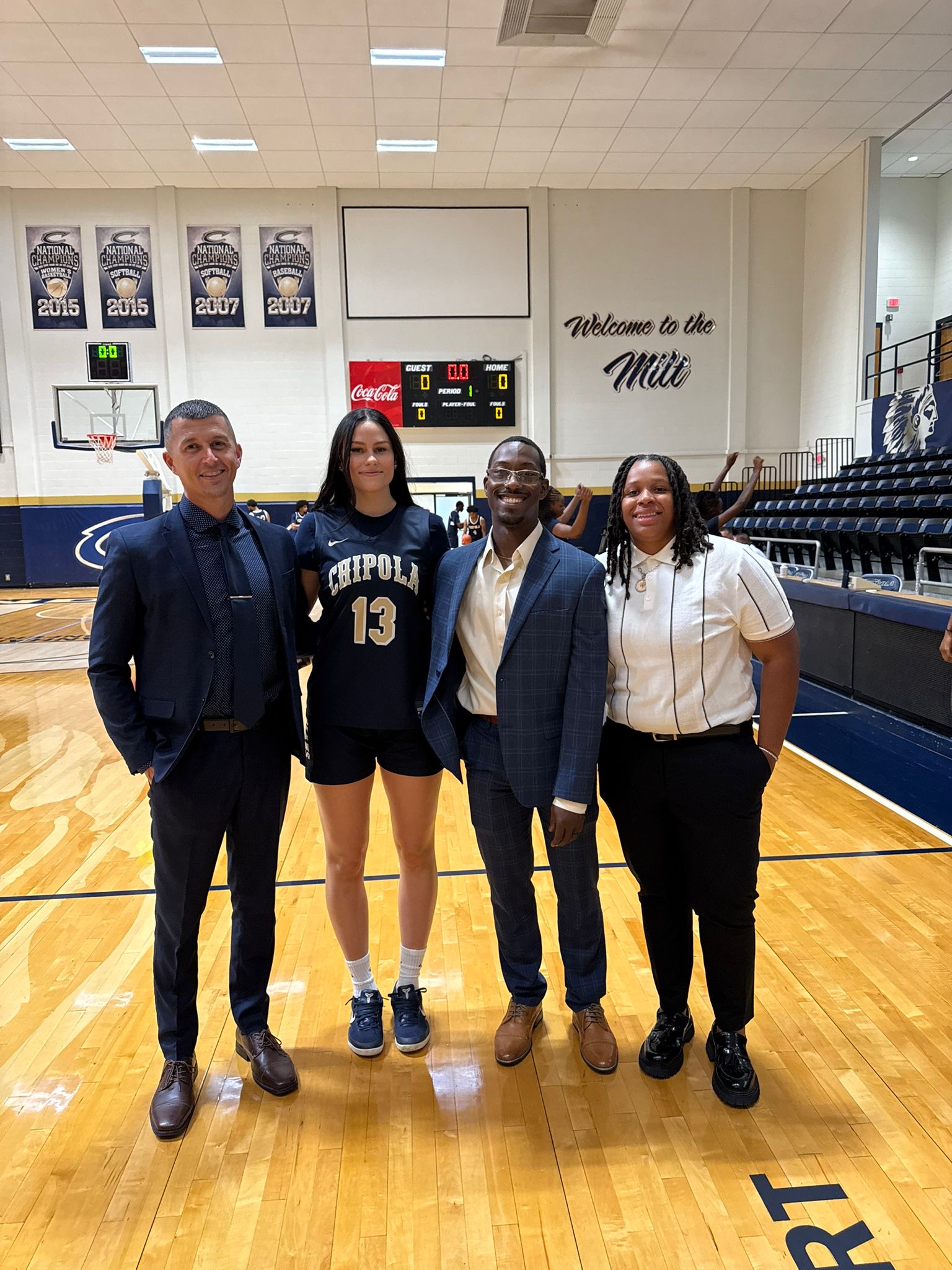
  • Chipola College Coaches Welcome Latvian Shooting Star Zane Straudovska

    Chipola College Coaches Welcome Latvian Shooting Star Zane Straudovska

    The first impressions of Zane Straudovska from her opening practices with Chipola College have been very positive.

    Chipola College has established itself as one of the premier junior college women’s basketball programs in the United States. During the 2025–26 season, the Lady Indians reached the No. 1 ranking in the NJCAA Division I national poll, further confirming the program’s championship-level status. (Chipola College⁠)

    Now, the Latvian shooting star has joined the program and is preparing for her first season in American college basketball.

    After watching Zane in her first practices, Chipola head coach Mitch Rolls praised her maturity and professionalism. Coach Rolls described Zane as very mature and very professional in her approach to the game.

    Coming from a championship-level coach, that is a significant compliment and an encouraging first impression for the young Latvian player.

    Stravdovska brings considerable international experience to Chipola. She has represented Latvia at the U16, U18 and U20 levels, competing against some of the strongest national programs in European youth basketball. (FIBA Basketball⁠)

    In the 2026 FIBA U20 Women’s EuroBasket, Zane played for Latvia and averaged 4.1 points and 2.6 rebounds, while shooting 33.3% from three-point range. (FIBA Basketball⁠)

    At the club level, she played for TTT Juniores, gaining valuable experience in Latvian and Baltic basketball. In the 2026 WBBL B Division Final Four, Straudovska scored 12 points in the final and was named to the tournament’s All-Star Five. In the semifinal, she scored 16 points, including four three-pointers. (SBBL⁠)

    She also played an important role for TTT Juniores during the Latvian season, showing her ability to stretch the floor and create offense from the perimeter.

    Now, under the leadership of Coach Mitch Rolls, Zane has an opportunity to take another major step in her development.

    Chipola offers a winning culture, high-level coaching and championship expectations. For Stravdovska, the 2026–27 season will be an important opportunity to translate her European and international experience into American college basketball.

    We hope Zane will shine throughout the season and prove that her performances in Latvia and with the Latvian national teams were only the beginning of what she can accomplish.

    With her shooting ability, international experience, maturity and professional approach, Zane Stravdovska is ready for her next challenge — and Chipola College may be the perfect place for her to take the next step.